
IAMG 2026 – Bangalore
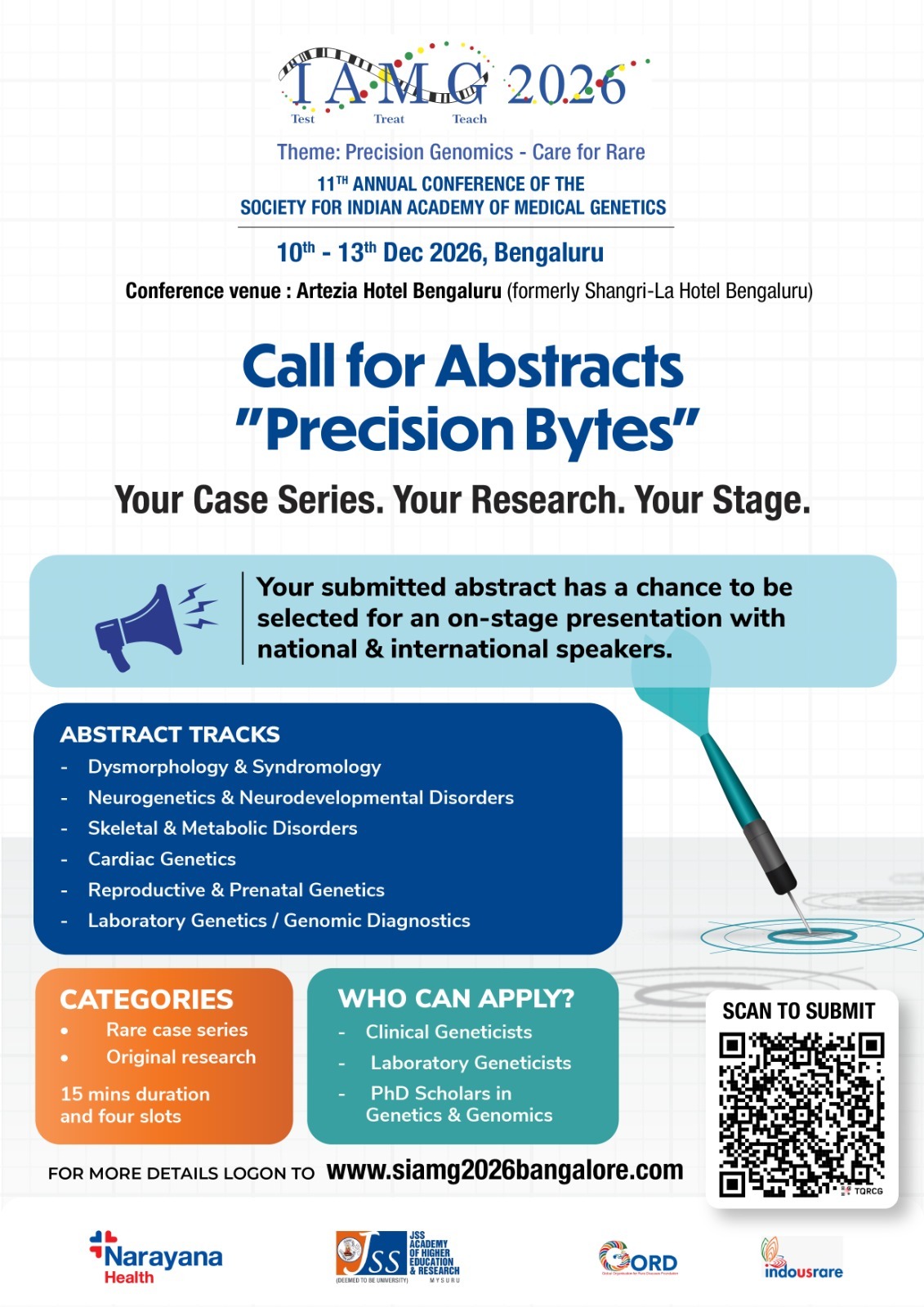
Everything you need to know about submitting your work for the 11th Annual Conference of SIAMG and the Indo-US Rare Bridging Summit.
Rare phenotypes, skeletal dysplasia, dysmorphology, genotype-phenotype correlation, common traits, basic genetics, genetic counseling, immunogenetics, cancer genetics, developmental genetics, prenatal diagnosis, ethical issues, Cardiac genetics, Neuro genetics, mixed bag.
Authors must submit abstracts under one of the following categories:
Structure
Introduction/Background · Case Description · Results/Findings · Conclusion
Structure
Introduction/Background · Materials and Methods · Case Description · Results · Conclusion
Clinical, Molecular & Translational Genetics
Structure
Introduction/Background · Materials and Methods · Results · Conclusion
Once abstracts are reviewed and accepted, selected submissions will be assigned to one of the following presentation formats:
Tables, images, graphs, URLs are not allowed.
All submissions will undergo peer review. Selected abstracts will be invited for oral or poster presentations at the conference.
We look forward to your contributions toward advancing medical genetics.
Authors must submit abstracts under one of the following categories:
| Category | Scope / Description |
|---|---|
| Case Reports | Novel syndromes and previously unreported rare conditions; novel phenotypes of known disorders; prenatal, paediatric, and adult presentations; rare or unusual clinical presentations; diagnostic challenges; ethical, legal, and psychosocial aspects |
| Case Series | Phenotype–genotype correlations; clinical cohorts in rare diseases; prenatal/pediatric/adult series; observational studies and registries; genetic counselling, service delivery, or education studies |
| Original Research | Clinical and cohort studies; molecular genetics and genomic diagnostics; functional genomics; translational research; therapeutic innovation; precision medicine |
| Diagnostics & Genomic Tech | Advances in genetic testing; AI/ML in diagnostics; bioinformatics; computational biology; laboratory innovations; biomarkers and screening approaches |
| Public Health & Policy | Rare disease registries; population genetics; epidemiology; health systems research; policy and regulatory science; newborn screening programs |
| Patient Advocacy & Ethics | Advocacy models; patient engagement; ethical, legal, and social implications; equity and access; psychosocial aspects; caregiver burden |
| Digital Health | Telemedicine; digital platforms; AI-driven clinical tools; wearables; real-world data; health tech and startup innovations |
| Therapeutics | Orphan drugs; gene and cell therapies; drug repurposing; clinical trials; regulatory pathways; access to therapies |
Once abstracts are reviewed and accepted, selected submissions will be assigned to one of the following presentation formats:
Authors must select only one category that best represents their work. The abstract title should not exceed 200 characters including spaces. All authors and their affiliations must be listed, clearly identifying the presenting author, with a maximum of three institutional affiliations per author.
The abstract body should be submitted as a Word document (.doc or .docx), formatted in Times New Roman, font size 12, with single spacing. The word limit is 300 words, excluding the title and author details.
Tables, images, graphs, and URLs are not permitted.
All abstracts will undergo peer review by the scientific committee. Selected submissions will be invited for either platform (oral) or poster presentations at the summit.
Join us in advancing rare disease research and innovation.